Architecture. Infrastructure. Build engineering. Three pillars, each adoptable on its own, designed to work consistently together.

Architecture
Layered application structure where dependencies only point down, DI-module composition and enforceable conventions for async, exceptions, enums, endpoints and tests.

Infrastructure
Independently published packages for persistence, messaging, telemetry, configuration, hosting, APIs, UIs and testing: reference only what you use.
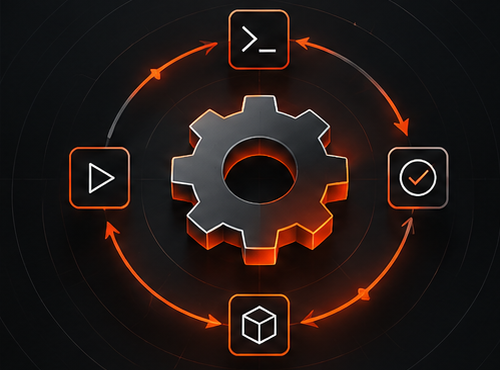
Build Ecosystem
Anarchy automation components and the anarchy-toolkit CLI: scaffolding, validation, tests, layering checks, packaging, versioning and releases.
Choose your entry point
Adopt the whole platform, or start with the single piece you need.
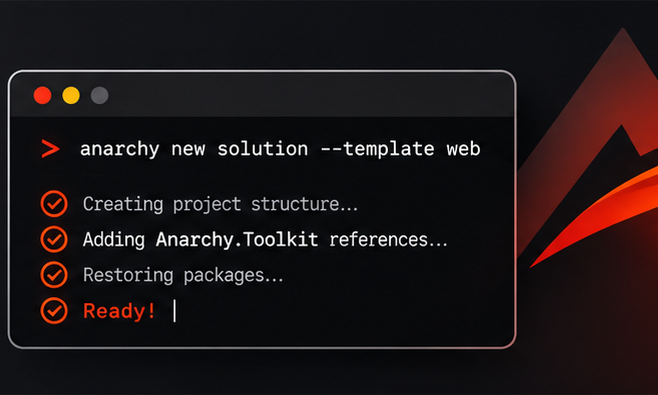
Start with the CLI tool
Bootstrap a layered solution with its build, Makefile and scripts, then scaffold APIs, jobs and UIs into it.
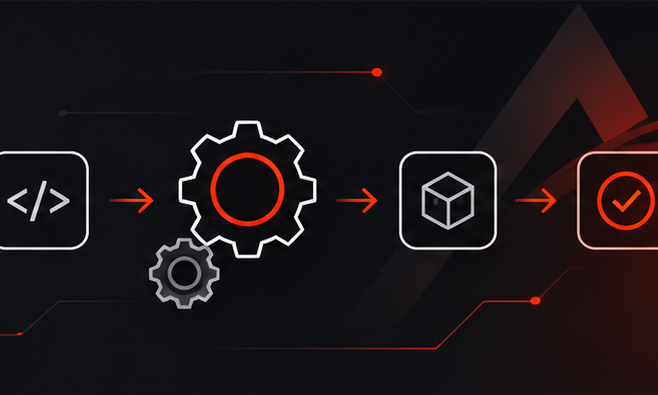
Bring Anarchy automation
Add compile, lint, test, layering, packaging and release targets to an existing repository.

Pick the packages
Persistence, messaging, telemetry, hosting, web and testing kits: reference only what you use.
Where to go next
- Overview: what the platform is, how its three pillars fit together and the ideas behind it.
- Getting Started: choose between the CLI tool, Anarchy automation and individual packages. The build is powered by Fallout Build.
- NuGet.org: every published
Anarchy.Toolkit.*package and its versions. - Adoption Advisor: a few questions about your project, a suggested adoption plan.
- Guides: how the platform fits together, walkthroughs for new and existing solutions, and the platform features.
- Conventions: recommendations for your code, each with a way to opt out.
- Samples: runnable applications composed from the platform.
- API reference: the generated reference for every public type.